In his first weekly update as Chief Executive, Steve Bennett looks back on our Scotland conference and Dr David Unwin's unforgettable talk on what medicine forgets, and what happens when we remember.
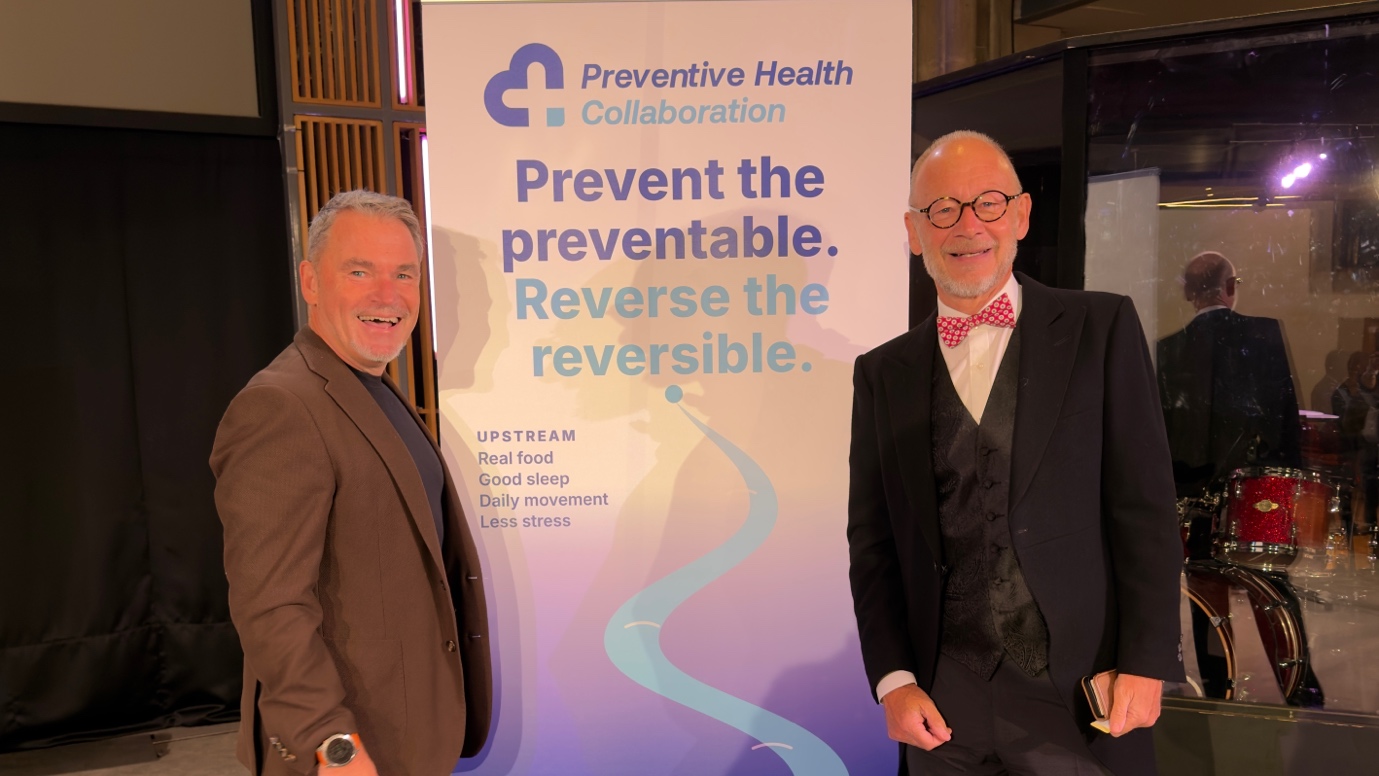
Friday 6 November was my first official day as Chief Executive of the Preventive Health Collaboration, and I couldn't have asked for a better start than our Scotland conference.
First, a huge well done to the PHC team who organised it. 130 people came, the atmosphere was fantastic, and every one of our speakers was excellent. If you couldn't be there, don't worry: we'll be uploading the talks to our YouTube channel soon, and I'll let you know as soon as they're live.
Each week I'll share some news and a few thoughts of my own. This week I want to share some takeaways from the opening talk by Dr David Unwin, chair of our Scientific Advisory Committee. It was one of the best talks I have ever heard.
A doctor's bag from 1905
David walked on stage dressed as a GP from 1905, the year his practice in Southport opened, carrying a real doctor's bag from that era.
Inside were strychnine, arsenic, mercury and heroin, all prescribed in good faith by a fully trained doctor who believed he was doing his best for his patients.
His point was a serious one. Medicine is slow to admit its mistakes. It took 29 years to act on heroin, 27 years on benzodiazepines and 23 years on OxyContin. As one of David's professors told him:
"50% of your treatments will stand the test of time. You just don't know which 50%."
The forgotten cure from Edinburgh
Sometimes medicine forgets what it already got right. In 1796, Dr John Rollo of Edinburgh treated Captain Meredith of the Royal Artillery, who was losing a kilo of sugar a day in his urine. Rollo reasoned that if the urine was full of sugar, the patient shouldn't eat sugar. Within 12 weeks Captain Meredith's diabetes was in remission and he was back fighting.
That approach was a respected treatment for type 2 diabetes for over a hundred years, and then it was forgotten. When David began using a lower carb approach in 2012, he was told it was a dangerous fad.
What happens when we remember
Today 159 patients at David's practice are in drug free type 2 diabetes remission. That's 23% of the practice's diabetes register. By the last audit, the practice had saved £373,000 on its diabetes drug budget, and many patients have also come off blood pressure medication and antidepressants.
Every story counts
David also made the case that real patients' stories matter. Too often, someone who has transformed their health is dismissed as "just an anecdote". He told us about Chris, who weighed 19 stone with type 2 diabetes at 14 and has now been in drug free remission for 11 years. With careful records, even a single patient's results can be shown to be statistically significant.
David's talk sums up what PHC is for: building the evidence, teaching it widely and making sure we never forget what works. Most diseases of modern life can be prevented, and many can be reversed.
Thank you to everyone who made Scotland such a success. More next week.
Steve Bennett, Chief Executive, Preventive Health Collaboration